If you own an indoor pool or an enclosed pool area in Houston, you already know the problem — the air feels thick, the walls sweat, and that musty smell never really goes away. Excess humidity around pools is not just uncomfortable. It causes real damage: peeling paint, corroded metal, mold on walls, and structural rot if left unchecked.
We covered the root causes in detail in our guide on indoor pool humidity problems. This post focuses on what you can actually do about it — practical humidity solutions for pools that work in Houston’s climate.
Why Pool Humidity Is Especially Tricky in Houston
Houston’s climate already sits at 70–90% relative humidity for most of the year. When you add a heated pool to that equation — whether indoors or in a screened enclosure — evaporation pushes moisture levels even higher. The result is a space where standard dehumidifiers and ventilation systems are constantly fighting an uphill battle.
The key is not to fight humidity reactively but to manage it with the right combination of equipment, pool chemistry, and airflow systems. Here’s how to do it right.
1. Use a Pool Cover When the Pool Is Not in Use
The single most effective and lowest-cost humidity solution is simply covering your pool. A quality pool cover cuts evaporation by up to 95% when the pool is not being used. For indoor pools, this alone can dramatically reduce the load on any dehumidification system you have.
What to look for in a pool cover:
- Solid thermal covers for maximum evaporation reduction
- Automatic cover systems if you want daily convenience
- Safety covers if you have children or pets
Even for outdoor covered patios and screened enclosures, a cover overnight makes a significant difference in moisture levels by morning.
2. Install a Dedicated Pool Dehumidifier
A standard HVAC system or household dehumidifier is not designed to handle the moisture load from a pool. You need a unit specifically engineered for natatorium-style environments — these are called pool dehumidifiers or dedicated outdoor air systems (DOAS).
What makes pool dehumidifiers different?
- They are built to handle constant high-humidity environments without corroding
- They recirculate heat from the dehumidification process back into the pool water or the air, saving energy
- They are sized based on pool surface area, not room square footage
For most Houston residential pools, you’ll need a unit rated for at least 100–200 pints per day. Brands like PoolPak, Dectron, and Seresco are commonly recommended for residential and semi-commercial installations.
A licensed HVAC contractor familiar with aquatic environments should size and install the system — undersizing is a common and costly mistake.
3. Improve Ventilation and Air Circulation
Dehumidification alone isn’t enough if the air around your pool isn’t moving. Stagnant, humid air sits on surfaces and speeds up corrosion and mold growth. Good ventilation means bringing in drier outside air and pushing out the humid pool air.
Effective ventilation strategies include:
- Exhaust fans positioned near the water surface where evaporation is highest
- Supply air vents aimed across the pool surface to encourage evaporation to the exhaust
- Heat recovery ventilators (HRV) that pre-condition incoming air to reduce energy costs
- Regular air changes — aim for 4–6 complete air changes per hour for enclosed pool spaces
If your pool is in an outdoor screened enclosure, ceiling fans and open panel designs that allow cross-breeze airflow are your best tools.
4. Keep Your Pool Water Chemistry Balanced
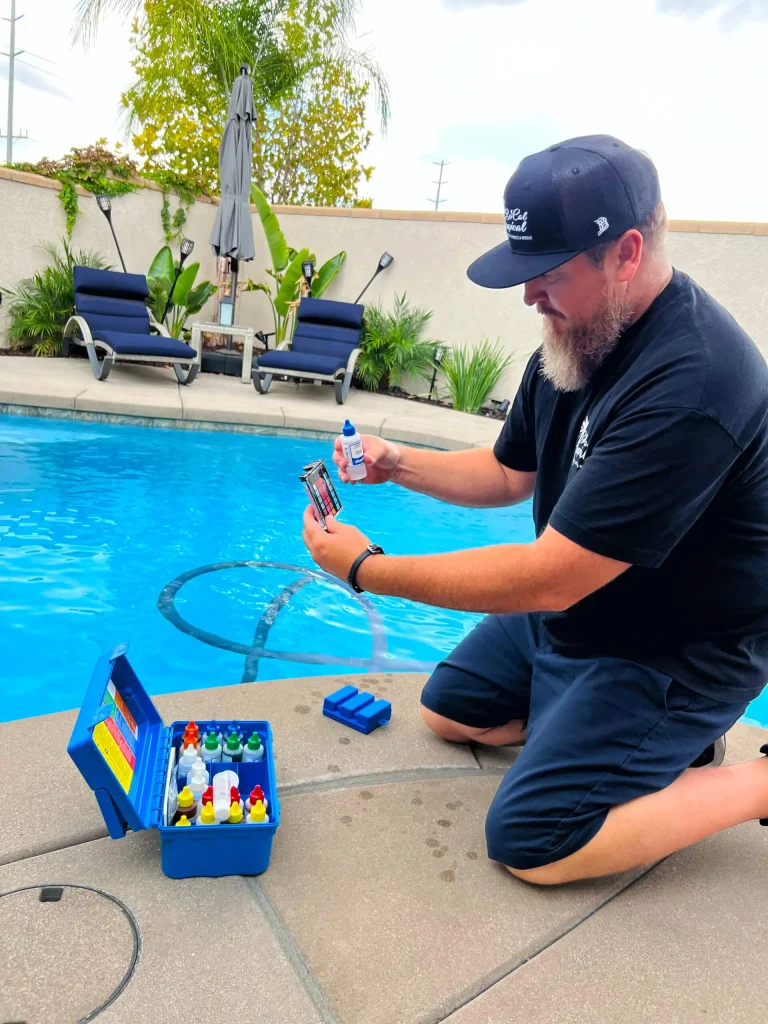
This one often surprises homeowners: proper water chemistry directly affects how much your pool evaporates. An unbalanced pool — particularly one with high pH or alkalinity — tends to off-gas more aggressively. A well-balanced pool loses water more slowly. Our team checks and adjusts chemistry on every visit as part of our weekly pool service.
For humidity control specifically, keep these levels in range:
- pH: 7.4 – 7.6
- Total alkalinity: 80 – 120 ppm
- Water temperature: Keep it consistent — cooler water evaporates less
- Calcium hardness: 200 – 400 ppm
Additionally, keeping your pool at a slightly lower temperature when not in active use reduces evaporation significantly.
5. Check for and Repair Leaks Promptly
A leaking pool loses water constantly — and that water has to go somewhere. Even a small leak that drops water into the surrounding structure can contribute significantly to humidity and mold over time. If you notice your water level dropping faster than expected, it’s worth ruling out a leak before assuming it’s all evaporation. Our team handles pool equipment repair in Houston including diagnosing plumbing and structural issues that contribute to moisture problems.
6. Monitor and Control Pool Room Temperature
The humidity level in a pool room is directly tied to the temperature difference between the water and the air. If the air is cooler than the pool water, evaporation accelerates — and so does condensation on walls, windows, and equipment.
Best practices for temperature management:
- Keep the air temperature 2–4°F warmer than the pool water temperature
- Use a thermostatic controller on your HVAC system to maintain this balance automatically
- Insulate walls, ceilings, and windows properly in enclosed pool rooms — thermal bridging causes condensation spots
7. Schedule Regular Professional Pool Maintenance
Humidity problems compound quickly when a pool isn’t maintained consistently. Dirty filters reduce circulation efficiency, unbalanced chemistry accelerates evaporation, and equipment issues go unnoticed until they become expensive. Regular weekly pool cleaning keeps all these variables in check — which directly reduces the conditions that drive humidity problems.
For Houston homeowners dealing with persistent moisture issues, we also recommend pairing maintenance with periodic inspections of your pool equipment. A failing pump or broken return jet can create uneven water circulation that concentrates evaporation in certain areas. Learn more about pool pump maintenance tips to stay ahead of equipment-related humidity issues.
Get Expert Help Managing Pool Humidity in Houston
Controlling pool humidity is not a one-time fix — it’s an ongoing process that requires the right equipment, consistent maintenance, and chemistry that stays in balance. Team Pool Service has been helping Houston homeowners manage exactly this for over two decades.
Whether you need a full pool equipment inspection or just want to get on a reliable maintenance schedule, we’re here to help. Call us at 713-256-2877 or fill out the form on our homepage to request service today.