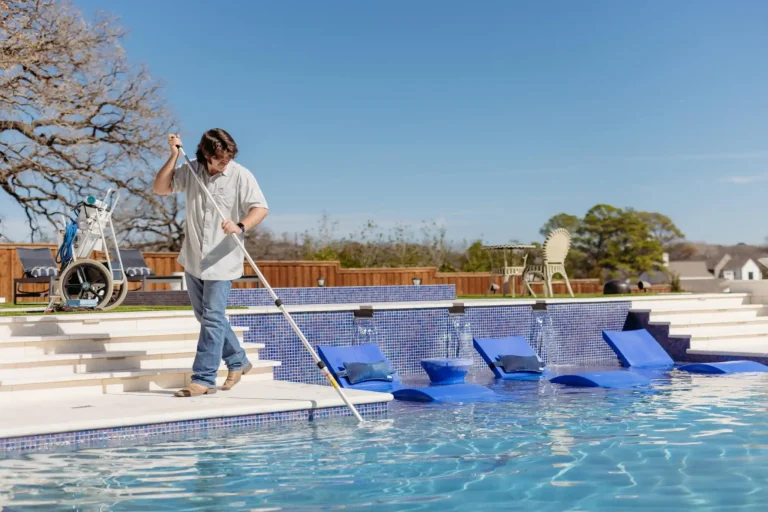
If you’ve spent any time browsing home remedy hacks online, you’ve probably come across the suggestion to use vinegar for cleaning your pool. It’s cheap, natural, and sits in almost every kitchen pantry — so it’s no surprise homeowners across the Greater Houston area wonder if it could replace expensive pool chemicals.
But before you start pouring gallons of white vinegar into your pool, it’s important to understand exactly what vinegar does chemically, where it can actually help, and where it can cause serious damage. In this article, we’ll break down the science, the myths, and the safe alternatives so you can keep your pool sparkling clean all summer long.
The Chemistry: Why People Think Vinegar Works
Vinegar is essentially a diluted solution of acetic acid, typically around 5% concentration. Acetic acid is a mild acid, which is why vinegar is often used to dissolve mineral deposits, cut through soap scum, and clean glass or tile in bathrooms.
Because pool owners often deal with similar issues — calcium deposits, scale buildup, and cloudy water — it seems logical that vinegar could help with pool maintenance too. Acids, in general, are known to break down calcium carbonate, which is the primary culprit behind white, chalky scale buildup on pool tiles and equipment.
This is true — but only in a very limited, localized context. The problem is that using vinegar in an entire swimming pool is a completely different scenario than using it to scrub a bathroom tile.
What Vinegar Actually Does in a Full Pool
It Barely Affects Water Chemistry
A typical residential swimming pool holds anywhere from 10,000 to 30,000 gallons of water. Vinegar is mostly water itself, with only a small percentage of acetic acid. If you were to pour a gallon of vinegar into a pool this size, the acid would become so diluted that it would have virtually no meaningful impact on your pool’s pH or total alkalinity.
In other words, dumping vinegar into your pool water won’t “clean” it in any significant way. Your pool’s chemical balance depends on maintaining precise levels of chlorine, pH, alkalinity, and calcium hardness — levels that are measured in parts per million. Vinegar simply isn’t concentrated or targeted enough to make a real difference at that scale.
It Can Slightly Lower pH — But Unpredictably
While the effect is minimal, vinegar is still acidic, meaning that in large enough quantities, it could theoretically lower your pool’s pH. However, this is not a controlled or reliable way to manage pH levels. Unlike products specifically designed for pool use, such as muriatic acid or sodium bisulfate, vinegar doesn’t come with clear dosing instructions for pool volumes.
Adding random amounts of vinegar could throw off your water balance in unpredictable ways, leading to corrosion of metal fixtures, damage to pool liners, or irritation to swimmers’ skin and eyes.
It Won’t Kill Algae or Bacteria
One of the most common misconceptions is that vinegar can act as a substitute for chlorine or algaecide. Unfortunately, this isn’t true. Vinegar is not a registered sanitizer or disinfectant for pool use. It doesn’t have the oxidizing power needed to kill bacteria, viruses, or algae effectively in an outdoor swimming pool environment.
Chlorine and bromine work by oxidizing organic contaminants and disrupting the cellular processes of microorganisms. Vinegar’s mild acidity doesn’t come close to replicating this effect, especially in a large body of water exposed to sunlight, debris, and swimmers.
Where Vinegar Can Actually Help
While pouring vinegar into your pool water isn’t effective, using it as a spot-cleaning agent for specific pool components can be genuinely useful.
Cleaning Pool Tiles and Grout
Vinegar can help dissolve calcium buildup on pool tiles when applied directly and left to sit for a few minutes before scrubbing. Because you’re using it in a concentrated, undiluted form directly on the surface, it has enough acidic strength to break down mineral deposits.
Cleaning Pool Filters
Pool filter cartridges often accumulate calcium scale and mineral buildup over time. Soaking a cartridge filter in a mixture of water and vinegar (or straight vinegar for tougher buildup) can help loosen and remove this debris, making your filter more efficient.
Removing Scale from Pool Toys and Accessories
Small pool accessories, like ladders, handrails, or toys, can develop hard water stains and scale. A vinegar solution can help clean these surfaces without the harshness of stronger commercial chemicals.
Cleaning Pool Deck Stains
Vinegar can also be used on pool deck surfaces to help remove certain mineral stains, especially when combined with baking soda for a more powerful scrubbing paste.
The Risks of Using Vinegar Incorrectly
While vinegar has its place for spot-cleaning, using it incorrectly can cause real problems for your pool.
Corrosion of Metal Components
Pools often have metal fixtures like ladders, handrails, and pump components. Repeated exposure to acidic substances, even mild ones like vinegar, can accelerate corrosion over time if not rinsed properly.
Damage to Pool Liners
Vinyl pool liners can be sensitive to prolonged acid exposure. While a quick cleaning wipe-down is generally safe, soaking large liner areas in vinegar solutions for extended periods could weaken the material.
False Sense of Security
Perhaps the biggest risk isn’t physical damage — it’s the false belief that vinegar can replace proper pool sanitization. Pools require carefully balanced chemical levels to remain safe for swimmers. Relying on home remedies like vinegar instead of professional-grade chemicals can lead to algae blooms, bacterial contamination, and unsafe swimming conditions, especially in the hot and humid Houston climate where algae and bacteria thrive.
Also read: Humidity Solutions for Pools: How Houston Homeowners Can Control Moisture Year-Round
What Houston Pool Owners Should Use Instead
Given Houston’s warm temperatures and high humidity for much of the year, pools in our area are especially prone to rapid chemical imbalances, algae growth, and mineral buildup from our notoriously hard water. Here’s what actually works:
- Chlorine or Bromine – for effective sanitization and killing bacteria/algae
- Muriatic Acid or Sodium Bisulfate – for safely and precisely lowering pH
- Sodium Carbonate (Soda Ash) – for raising pH when needed
- Calcium Hypochlorite Shock Treatments – for regular maintenance shocking
- Pool-Specific Scale Removers – for larger-scale mineral buildup issues
These products are formulated specifically for pool water chemistry, with clear dosing guidelines based on pool volume, making them far safer and more effective than household vinegar.
When to Call a Professional
Balancing pool chemistry isn’t just about tossing in random household products and hoping for the best. It requires regular testing, precise measurements, and an understanding of how Houston’s climate and water supply affect your specific pool.
If you’ve noticed cloudy water, stubborn scale buildup, or algae growth, it might be time to bring in a professional pool cleaning service rather than experimenting with vinegar or other DIY solutions. A trained technician can accurately diagnose the issue and apply the right treatment, saving you time, money, and potential damage to your pool.
Final Thoughts
So, what does vinegar do to a swimming pool? In short: not much, at least when it comes to actual water treatment. While it can be a handy, natural cleaner for pool tiles, filters, and accessories, it is not an effective substitute for proper pool chemicals like chlorine or pH adjusters.
If you’re a pool owner in the Greater Houston area looking for reliable, professional pool care, don’t leave your water quality to chance. Our team specializes in keeping pools clean, balanced, and swim-ready all year long — no vinegar required. Contact us today to schedule a consultation and let the experts handle your pool maintenance the right way.
Check out our Pool Service in Houston