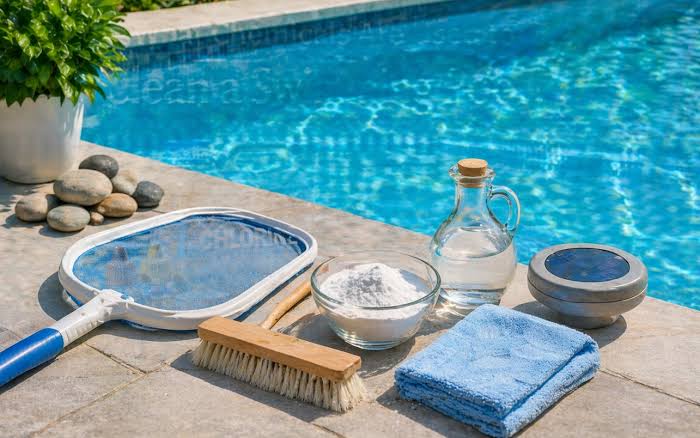
Nothing ruins a perfect Houston afternoon faster than walking outside to find your sparkling blue pool has turned into a swampy green mess overnight. If you’re staring at a pool that looks more like a pond than a place to swim, don’t panic — a green pool can almost always be brought back to crystal-clear condition within 24 to 72 hours with the right approach.
In this guide, we’ll break down exactly why your pool turned green, the fastest proven method to clear it up, and how to keep it from happening again — especially in Houston’s hot, humid climate where algae thrives.
Why Did My Pool Turn Green in the First Place?
Before jumping into the fix, it helps to understand the cause. Green pool water is almost always the result of algae growth, which happens when three conditions line up:
- Low or inconsistent chlorine levels that allow algae spores to survive and multiply
- Poor water circulation or filtration, often from a broken pump, clogged filter, or extended pool closure
- Warm temperatures and sunlight, which Houston has in abundance for most of the year
Algae can turn a pool green in as little as 24-48 hours, especially during peak summer months when temperatures stay above 85°F for weeks at a time. Rainstorms, which are common in the Greater Houston area, can also introduce organic debris and dilute your chlorine, kickstarting an algae bloom almost overnight.
Also read: Can a Green Pool Be Cleaned?
The Fastest Way to Clear a Green Pool: Step-by-Step
The quickest, most reliable method for clearing a green pool is called the “shock and filter” method. It’s the same process professional pool technicians use, and it can take a severely green pool to swimmable in as little as one to three days.
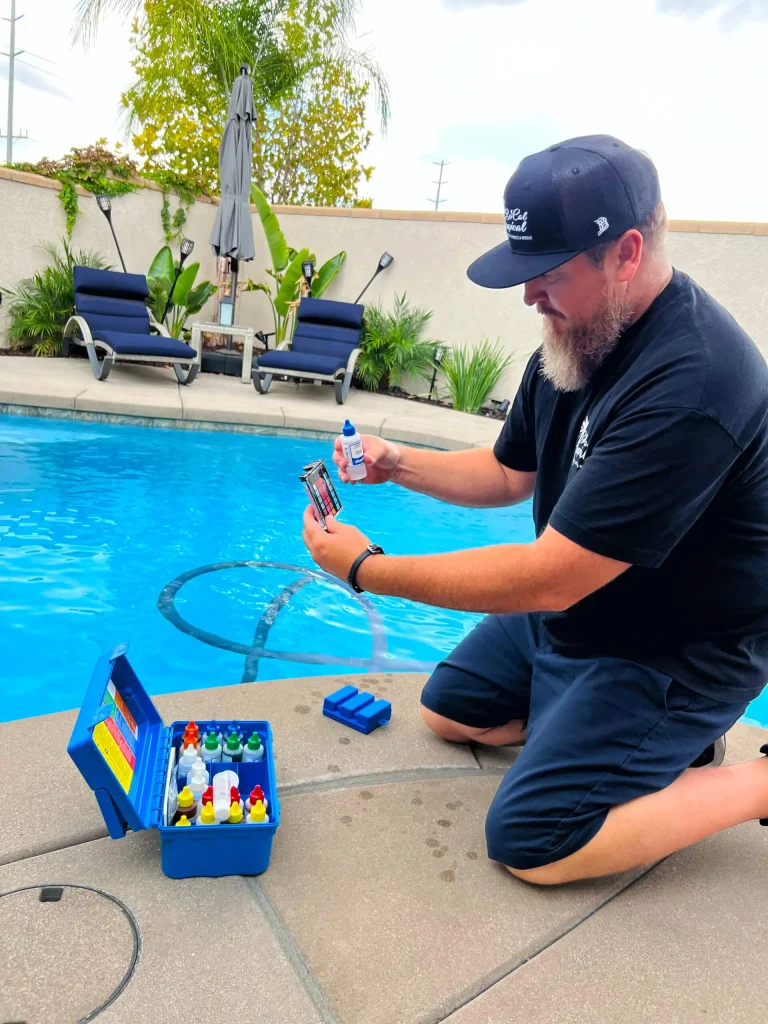
Step 1: Test and Balance Your Water
Before adding any chemicals, test your water’s pH and alkalinity. Algae thrives in unbalanced water, and chlorine works far less effectively when pH is too high. Aim for:
- pH: 7.2 to 7.6
- Total alkalinity: 80 to 120 ppm
If your pH is above 7.6, add a pH decreaser before shocking. This one step dramatically improves how fast the chlorine you add can actually kill the algae.
Step 2: Brush the Pool
Algae often clings to walls, steps, and the floor in a slimy film. Brush every surface thoroughly to break up the algae and release it into the water. This exposes more surface area to the chlorine you’re about to add, speeding up the kill process significantly.
Step 3: Shock the Pool (Multiple Doses if Needed)
This is the most critical step. Use a granular pool shock with high available chlorine (cal-hypo or dichlor-based shock works well). For a severely green pool, standard dosing won’t cut it — you’ll likely need 2 to 4 times the normal shock dose per 10,000 gallons.
Add the shock in the evening or at night. Sunlight burns off chlorine quickly, so treating your pool after the sun goes down allows the chemical to work overnight without being degraded by UV rays.
Step 4: Run the Filter Continuously
Once shocked, run your pool pump and filter 24 hours a day until the water clears. This is non-negotiable if you want fast results. Circulation is what pulls dead algae out of the water and into your filter, where it can actually be removed.
If your filter is a cartridge or DE filter, expect to backwash or clean it multiple times during this process, as it will clog quickly with dead algae.
Step 5: Brush Again Daily
Continue brushing the pool once or twice a day while the water clears. This prevents algae from re-settling on surfaces and speeds up the overall cleanup timeline.
Step 6: Vacuum or Use a Pool Cleaner
As the water starts to clear, dead algae will sink to the bottom as fine sediment. A manual vacuum set to waste (bypassing the filter) is the fastest way to remove this sediment without immediately clogging your filter system.
Step 7: Re-Test and Adjust
After 24 hours, retest your chlorine and pH levels. If chlorine has dropped below 3 ppm and the water is still cloudy or green-tinged, add another round of shock. Most moderately green pools clear within one shock treatment; severely green or “swamp” pools may need two or three rounds over several days.
How Long Does It Actually Take?
Timeline depends on how green your pool is:
- Light green/cloudy water: 24 hours with a single shock treatment and continuous filtration
- Medium green water: 24-48 hours with one to two shock treatments
- Dark green/black “swamp” pools: 3-5 days, often requiring multiple shock treatments, filter cleanings, and possibly a flocculant to clear residual haze
Should You Use a Flocculant or Clarifier?
For extremely cloudy water after the algae has been killed, a flocculant (floc) can speed things up dramatically. Floc clumps fine particles together so they sink to the pool floor, where you can vacuum them out directly — often clearing a hazy pool in just a few hours rather than waiting for the filter to slowly polish the water.
A clarifier works more slowly by coagulating particles so your filter catches them more efficiently. It’s gentler but takes longer, generally 24-48 hours.
If you’re in a hurry, floc combined with a manual vacuum is typically the fastest path to a swimmable pool.
Common Mistakes That Slow Down the Process
- Adding algaecide instead of shock: Algaecide alone rarely kills a full-blown bloom fast enough. Shock should always be the primary treatment.
- Not running the pump 24/7: Circulation is what actually removes dead algae from the water.
- Shocking during the day: Sunlight breaks down chlorine before it can do its job.
- Ignoring the filter: A clogged filter can’t remove anything, no matter how much shock you add.
- Skipping the pH check: High pH neutralizes chlorine’s effectiveness, wasting time and money.
Why Houston Pools Are Especially Prone to Turning Green
The Greater Houston area’s combination of high humidity, intense heat, and frequent heavy rainfall creates near-perfect conditions for algae growth. A single missed week of maintenance during summer, or one hard rainstorm that dilutes your chlorine, is often all it takes for a pool to go green. Homes near wooded areas or with heavy tree cover also see more organic debris entering the pool, adding nutrients that feed algae blooms.
Also read: Green Pool Cleaning in Houston: How to Restore Your Pool from Algae to Swim-Ready Fast
When to Call a Professional
If you’ve shocked your pool multiple times and it’s still not clearing, or if you simply don’t have the time to run this process yourself, a professional pool cleaning service can typically restore a green pool to swimmable condition faster than DIY methods. Professionals have access to commercial-grade chemicals, specialized equipment, and the experience to diagnose underlying issues — like a failing pump or filter — that might be causing the algae to keep coming back.
Final Thoughts
A green pool looks alarming, but it’s rarely a permanent problem. By balancing your water, shocking aggressively, running your filter continuously, and staying on top of brushing and vacuuming, most pools clear up within a few days. The key is acting fast, using enough chlorine to actually overwhelm the algae, and keeping the water circulating until it’s fully clear.
If you’re in the Greater Houston area and would rather leave the green pool headache to the experts, our team specializes in fast, effective algae removal and ongoing pool maintenance to make sure it doesn’t happen again. Reach out today, and we’ll have your pool back to crystal-clear and swim-ready in no time.
Turn your Green Pool into crystal-clear water with our trusted Green Pool Cleaning Service. Request your free quote today.