Owning a pool in Houston is one of life’s best upgrades — until it turns green, the pump starts making weird noises, or you realize you have no idea what your chemical levels should be. Sound familiar?
The good news? Pool maintenance isn’t complicated once you know the basics. This guide walks you through everything: weekly tasks, water chemistry, equipment upkeep, and when it makes more sense to just hand it off to a pro.
Why Pool Maintenance Actually Matters
It’s easy to put off pool care when the water looks “fine.” But a poorly maintained pool can cause skin and eye irritation, damage expensive equipment, and turn into a full-blown algae swamp after just one rainy week in Houston.
Staying on top of maintenance protects your investment, keeps your family safe, and saves you from expensive repairs down the line.
Step 1: Test Your Water Chemistry (At Least Weekly)
This is the foundation of everything. If your water chemistry is off, nothing else matters.
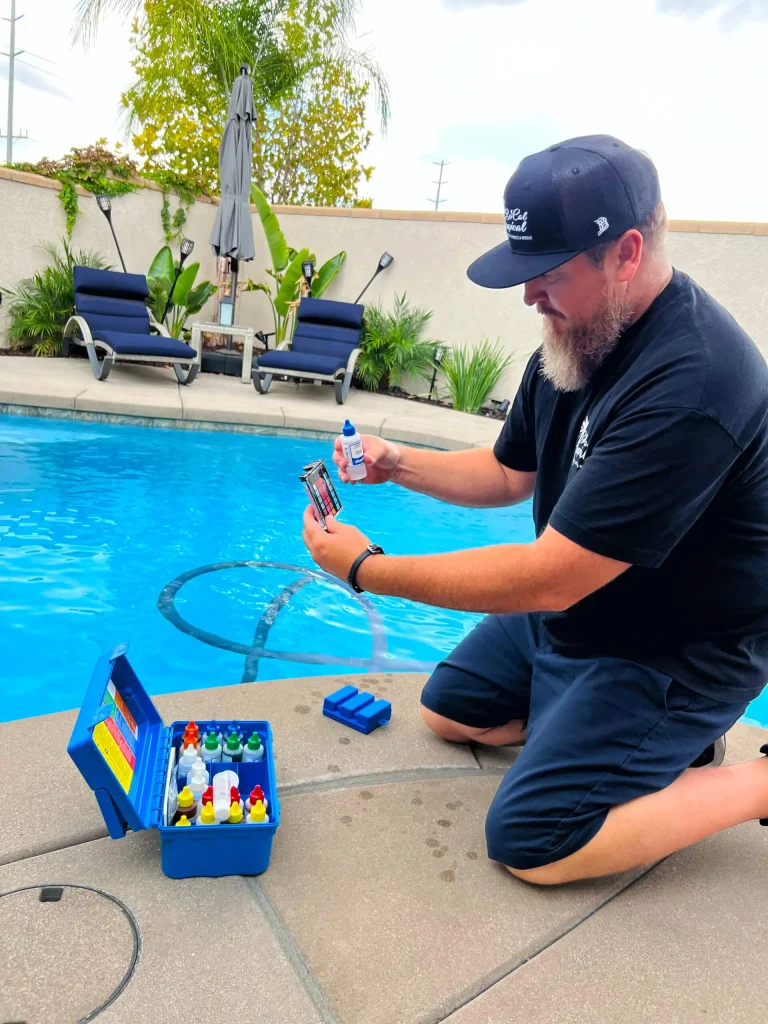
Here’s what to test and what the ideal ranges are:
| Parameter | Ideal Range |
| pH | 7.4 – 7.6 |
| Free Chlorine | 1 – 3 ppm |
| Total Alkalinity | 80 – 120 ppm |
| Cyanuric Acid (CYA) | 30 – 50 ppm |
| Calcium Hardness | 200 – 400 ppm |
Use a reliable test kit or test strips, and check these at least once a week — more often during summer or after a big rainstorm. Houston’s heat and humidity speed up chemical depletion faster than most other climates.
Pro tip: Always adjust alkalinity before pH. Getting alkalinity right first makes pH much easier to stabilize.
Step 2: Skim, Brush, and Vacuum — Every Week
Physical cleaning is just as important as chemical balance.
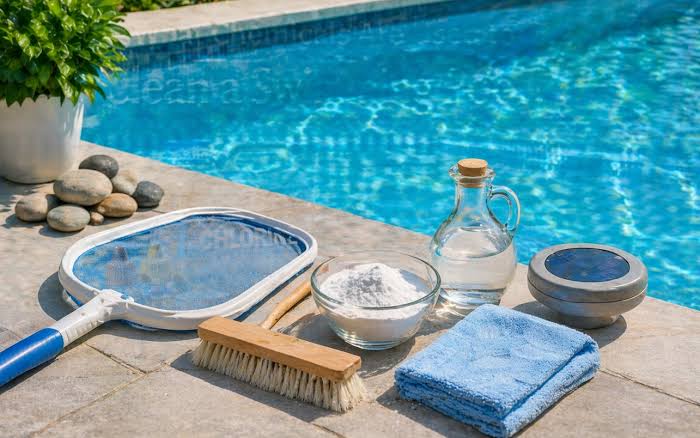
Skimming: Use a leaf net to skim the surface daily if possible, or at minimum before every swim. Leaves and debris break down and throw off your chemistry if left sitting.
Brushing: Brush your pool walls, steps, and corners weekly. This prevents algae from taking hold in those low-circulation spots. Don’t skip the steps — that’s where algae loves to start.
Vacuuming: Vacuum the floor of your pool weekly to remove dirt and debris that sinks to the bottom. You can use a manual vacuum or a robotic cleaner — either works.
If you’re skipping these steps because life gets busy, that’s exactly what weekly pool service is built for. A pro team handles all of it so you don’t have to think about it.
Step 3: Clean Your Skimmer and Pump Baskets
Your pool has two baskets that catch debris before it reaches the pump: the skimmer basket (inside the wall of the pool) and the pump basket (inside the equipment pad). Both need to be emptied weekly.
A clogged basket restricts water flow and puts strain on your pump — which is expensive to repair or replace.
Speaking of pumps, make sure yours is running 8–12 hours per day during summer months. Circulation is what keeps water clean and evenly distributed chemicals throughout the pool.
Step 4: Backwash or Clean Your Filter Regularly
Your filter is doing the heavy lifting when it comes to keeping water clear. There are three types:
Sand filters need to be backwashed every 4–6 weeks or when the pressure gauge reads 8–10 PSI above normal.
Cartridge filters need to be removed and rinsed every 2–4 weeks. Deep clean them with a filter cleaner solution every few months.
DE (diatomaceous earth) filters are the most thorough but need backwashing plus fresh DE added after each backwash.
A dirty or damaged filter means cloudy water no matter how good your chemistry is. If your filter isn’t performing like it should, it might be time for a professional pool equipment repair check.
Step 5: Maintain Your Pool Pump
Your pump is the heart of your pool system. Without it circulating water, nothing works — not your chemicals, not your filter, not your sanitizer.
Watch for these warning signs:
- Loud grinding or screeching noise
- Pool pump not priming (losing suction)
- Water not circulating properly
- Pump running but pressure is low
Any of these could mean worn bearings, a failing seal, or clogged impeller. Catching these issues early is way cheaper than waiting for a full breakdown.
For a deep dive on this topic, check out our guide: Pool Pump Maintenance Tips Every Houston Pool Owner Should Know.
If you’re already dealing with a pump issue, our pool pump repair team can diagnose and fix it fast.
Step 6: Shock Your Pool Every 1–2 Weeks
Shocking means adding a large dose of chlorine (or non-chlorine shock) to kill bacteria, break down chloramines (that chlorine smell is actually a sign of bad chemistry, not clean water), and reset your sanitizer levels.
Shock your pool:
- Every 1–2 weeks as routine maintenance
- After heavy rain or a big pool party
- Anytime the water looks hazy or has an odor
- After a green-to-clean treatment
Always shock in the evening — UV rays from the sun burn off unsterilized chlorine fast.
Step 7: Watch for Algae Before It Takes Over
Algae can go from a little green tint to a full-blown swamp in 48–72 hours, especially in Houston summers. The moment you spot green, yellow, or black discoloration on your walls or water, act fast.
Early-stage algae: brush aggressively, shock the pool, and run the filter continuously.
Full green pool: this usually requires a more intensive treatment process. If your pool has already gone green, read our guide on green pool cleaning in Houston — or just call us. We can restore a swamp to swim-ready in as little as 72 hours with our Green to Clean service.
Step 8: Keep the Water Level Right
Water level should be at the midpoint of your skimmer opening. Too low and the pump runs dry (damaging it). Too high and the skimmer can’t do its job.
Evaporation in Houston summers can drop levels fast — especially during heat waves. Top off with a garden hose as needed, but don’t overfill after heavy rain.
Seasonal Pool Care in Houston
Houston doesn’t have the same seasonal shifts as northern states, but you still need to adjust your maintenance by time of year:
Spring/Summer (March – September): Peak usage season. Run the pump longer (10–12 hrs/day), test chemistry 2x/week, and shock more frequently. Pollen and storms hit the water constantly.
Fall (October – November): Leaves are the enemy. Skim more often and watch alkalinity as temperatures shift.
Winter (December – February): Houston rarely freezes, but chemical usage drops. You can reduce pump hours but don’t shut down completely. Keep testing monthly.
When to Call a Professional
DIY maintenance works for routine upkeep — but some situations call for an expert:
- Water won’t clear up despite correct chemistry
- Equipment is making unusual sounds or not working properly
- Pool turned green after a storm
- You want consistent, hands-off service every week
Not sure if your pool needs professional attention? Here are 5 signs your pool needs professional cleaning — worth a read before it becomes a bigger problem.
The Easiest Way to Maintain Your Pool: Weekly Service
Honestly? The best pool maintenance plan is one you don’t have to think about.
Our weekly pool service handles everything — chemical testing and balancing, skimming, brushing, vacuuming, filter checks, and equipment inspection. Every single week, on schedule. You’ll get a report after each visit so you always know what’s going on.
We serve homeowners across Houston, Katy, Cypress, The Woodlands, Sugar Land, Pearland, and more.
Ready to hand off the headache? Get a free estimate →