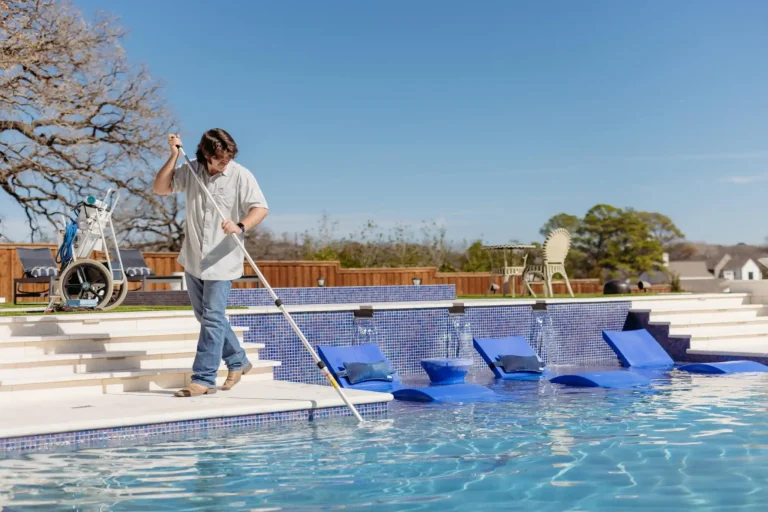
If you’ve ever peeked into a pool maintenance shed or scrolled through pool care forums, you’ve probably noticed something surprising: regular household baking soda sitting right next to specialty pool chemicals. It seems like an odd choice for something as technical as pool water balance, but there’s real science behind it. Pool owners across Greater Houston use baking soda for a very specific and important reason — it helps stabilize total alkalinity, which in turn protects the pool’s pH and keeps the water safe, clear, and comfortable to swim in.
In this article, we’ll break down exactly why baking soda plays such a big role in pool maintenance, how it works, and why it’s especially useful for pools here in the Houston area.
Also read: Humidity Solutions for Pools: How Houston Homeowners Can Control Moisture Year-Round
What Baking Soda Actually Does in a Pool
Baking soda, chemically known as sodium bicarbonate, is primarily added to swimming pools to raise total alkalinity (TA). Total alkalinity acts as a buffer for pH, meaning it helps prevent pH levels from swinging wildly whenever something enters the water — rain, sunscreen, sweat, leaves, or even the chemicals you add to sanitize the pool.
Without adequate alkalinity, pH becomes unstable. One day your pool might test perfectly fine, and the next day it could spike or crash after a pool party or a heavy rainstorm. Baking soda helps create a cushion so that these everyday changes don’t throw the entire chemical balance out of whack.
The Relationship Between Alkalinity and pH
Many pool owners confuse alkalinity and pH, but they aren’t the same thing. pH measures how acidic or basic the water is, on a scale from 0 to 14. Total alkalinity measures the water’s ability to resist changes in pH.
Think of alkalinity as the “shock absorber” for your pool’s pH. If alkalinity is too low, pH will bounce around unpredictably, even with small additions of chemicals or contaminants. If alkalinity is too high, pH tends to drift upward and becomes difficult to lower. Baking soda specifically targets alkalinity, and by extension, it stabilizes pH indirectly.
Why Balanced Alkalinity Matters So Much
Keeping total alkalinity in the ideal range (usually between 80–120 parts per million, depending on the pool surface and sanitizer type) has several benefits:
- Protects pool equipment – Unbalanced water can corrode metal fittings, heaters, and pump components.
- Prevents surface damage – Low alkalinity and low pH can etch plaster, tile grout, and vinyl liners.
- Improves swimmer comfort – Balanced water reduces skin and eye irritation.
- Keeps sanitizers effective – Chlorine works best within a specific pH range; unstable alkalinity throws that range off.
- Reduces scale and cloudiness – Alkalinity that’s too high can cause calcium scaling and cloudy water.
Because alkalinity affects so many aspects of pool health, many pool professionals consider it the very first thing to check and correct before adjusting anything else.
Signs Your Pool Might Need Baking Soda
You don’t need to guess whether your pool needs a boost in alkalinity — simple test strips or a liquid testing kit will tell you. However, there are also some common warning signs that alkalinity is too low:
- pH readings that change dramatically from day to day
- Green or cloudy water despite normal chlorine levels
- Corrosion or staining on metal ladders, rails, or fixtures
- Swimmers experiencing itchy skin or red eyes
- Vinyl liners becoming wrinkled or plaster surfaces feeling rough
If you notice several of these symptoms at once, low total alkalinity is often the underlying culprit, and baking soda is typically the easiest, safest fix.
How Much Baking Soda Should You Add?
The amount of baking soda needed depends on your pool’s current alkalinity level, its volume, and your target range. As a general guideline, 1.5 pounds of baking soda per 10,000 gallons of water raises total alkalinity by about 10 ppm. However, exact dosing can vary based on the size and shape of your pool, as well as other chemicals already present in the water.
Steps for Adding Baking Soda Safely
- Test your water first using a reliable test kit to determine current alkalinity and pH levels.
- Calculate the correct dosage based on your pool’s volume and how far off you are from the ideal range.
- Dissolve the baking soda in a bucket of water before adding it to the pool, or broadcast it evenly across the surface.
- Run the pump for several hours to circulate the water thoroughly.
- Retest after 6–24 hours to confirm the alkalinity has reached the target zone before making further adjustments.
Adding too much at once, or failing to circulate the water properly, can lead to overcorrection — which is why testing before and after is so important.
Baking Soda vs. Soda Ash: What’s the Difference?
Pool owners often mix up baking soda (sodium bicarbonate) with soda ash (sodium carbonate), but they serve different purposes.
- Baking soda primarily raises alkalinity, with a smaller effect on pH.
- Soda ash raises pH more aggressively, with a smaller effect on alkalinity.
If your pool’s pH is fine but alkalinity is low, baking soda is the better choice. If both pH and alkalinity are low, a combination of the two — or repeated small doses of baking soda over time — may be needed to bring both metrics into a healthy range gradually.
The Risks of Using Too Much Baking Soda
While baking soda is inexpensive and generally safe, overuse can cause problems of its own. Excessively high alkalinity can lead to:
- Cloudy water due to imbalanced mineral content
- Scale buildup on tile, equipment, and pool surfaces
- Difficulty lowering pH even when using acid-based products
- Reduced sanitizer efficiency, allowing algae or bacteria to develop
This is why professional pool technicians always test before and after treatment, rather than adding chemicals blindly.
Why This Matters Even More in the Houston Area
Houston’s climate creates unique challenges for pool maintenance. Frequent heavy rainfall, high humidity, and intense summer heat all affect water chemistry more dramatically than in drier climates. Rainwater is naturally slightly acidic and can quickly lower both pH and alkalinity after a storm — something Houston pool owners deal with often during hurricane season and the long, humid summer months.
Additionally, many Houston pools are used heavily throughout the year due to the region’s warm climate, meaning sunscreen, body oils, and sweat are constantly introduced into the water. This ongoing contamination can destabilize alkalinity faster than in pools used only seasonally.
Because of these local conditions, monitoring and adjusting alkalinity — often with baking soda — needs to happen more frequently for Houston-area pool owners compared to those in cooler, drier regions.
When to Call a Professional Pool Service
While adding baking soda is simple enough for many DIY pool owners, maintaining consistently balanced water chemistry over time takes more than the occasional test strip. Professional pool technicians use advanced testing methods to evaluate not just alkalinity and pH, but also calcium hardness, chlorine stabilizer levels, phosphates, and other factors that all interact with one another.
If you’re finding it difficult to keep your Houston pool balanced — especially after storms or heavy swimming season use — a professional pool cleaning service can save you time, prevent costly equipment damage, and ensure your water stays crystal clear and safe all year long.
Also read: 5 Signs Your Pool Needs Professional Cleaning
Final Thoughts
Baking soda might seem like an unusual addition to a swimming pool, but it plays a critical role in keeping total alkalinity — and therefore pH — stable and balanced. For Houston pool owners dealing with frequent rain, high humidity, and heavy pool usage, staying on top of alkalinity is especially important for protecting both swimmers and pool equipment.
If testing and balancing your pool feels like more than you want to manage on your own, our team is here to help. We specialize in keeping Greater Houston pools clean, balanced, and ready for swimming all year round — so you can spend less time managing chemicals and more time enjoying your pool.
Check out our Pool Service in Houston