If you own a pool in the Houston area, you’ve probably asked yourself this question while standing over a bucket of chlorine tablets: is this stuff actually safe? It’s a fair question. Chlorine has a strong smell, can bleach your favorite swimsuit, and sometimes leaves your eyes red after a long swim. So it’s natural to wonder whether it’s doing more harm than good.
The good news is that decades of research and public health data give us a clear answer. Chlorine, when used correctly, is safe for swimming and is actually one of the most effective tools we have for keeping pool water free of harmful bacteria and viruses. The key phrase there is “used correctly.” Problems arise not from chlorine itself, but from improper levels, poor maintenance, or misunderstanding what’s really causing that irritation at the pool.
In this article, we’ll break down what chlorine actually does, the real risks of over- or under-chlorination, and how professional pool maintenance keeps your family safe all summer long.
What Is Chlorine and Why Is It Used in Pools?
Chlorine is a chemical disinfectant that’s been used to purify water for over a century. Cities across the country, including Houston, use chlorine to treat municipal drinking water. In pools, chlorine works by breaking down the cell walls of bacteria, viruses, and algae, effectively neutralizing them before they can make swimmers sick.
Without chlorine or a comparable sanitizer, pools would quickly become breeding grounds for recreational water illnesses (RWIs), including E. coli, norovirus, and even the parasite Cryptosporidium. In hot, humid climates like Houston, where pools are used almost year-round, that risk is even higher because warm water accelerates bacterial growth.
So while chlorine has a reputation as a harsh chemical, its actual job is protective. It’s the reason you can swim in a public or backyard pool without worrying about contracting a waterborne illness.
The Real Question: Is It Chlorine, or Is It Chloramines?
Here’s where a lot of confusion comes from. That sharp, eye-watering smell many people associate with “too much chlorine” is actually a sign of the opposite problem.
That strong odor comes from chloramines, chemical compounds formed when chlorine reacts with sweat, urine, oils, and other organic contaminants introduced by swimmers. Chloramines are far more irritating to eyes, skin, and lungs than pure chlorine itself.
In other words, if your pool smells overwhelmingly like chlorine, it’s often a sign that there isn’t enough active chlorine in the water to break down contaminants efficiently, allowing chloramines to build up instead. A well-balanced, properly chlorinated pool should have little to no strong odor at all.
This is one of the biggest misconceptions in pool care, and it’s why simply “dumping in more chlorine” isn’t always the right fix. Balancing your pool takes more nuance than that.
Also read: What Chemical Keeps Swimming Pools Clean?
Potential Side Effects of Chlorine Exposure
While chlorine is safe at proper levels, exposure to improperly balanced water can cause real irritation. Understanding these effects helps explain why professional testing and maintenance matter.
Skin and Eye Irritation
High chloramine levels or imbalanced pH can cause redness, itching, or dryness of the skin and eyes. This is often mistaken for a chlorine allergy, but it’s usually a sign of poor water chemistry rather than chlorine sensitivity itself.
Respiratory Irritation
Indoor pools with poor ventilation and high chloramine levels have been linked to respiratory irritation, especially in people with asthma. This is less common in outdoor residential pools, which benefit from natural airflow, but it highlights the importance of proper chemical balance.
Hair and Skin Dryness
Chlorine can strip natural oils from your hair and skin, leading to dryness or a change in hair texture, especially for those with color-treated or chemically processed hair. This effect is cosmetic rather than dangerous but is a common complaint among frequent swimmers.
Rare Allergic Reactions
True chlorine allergies are rare, but some individuals may experience heightened sensitivity. If you notice consistent irritation even in a well-balanced pool, it’s worth speaking with a physician.
The Bigger Danger: Under-Chlorinated Pools
While much attention is given to chlorine’s potential downsides, the more significant risk to public health is actually not enough chlorine.
Under-chlorinated pools allow bacteria and parasites to thrive. Recreational water illnesses can cause gastrointestinal issues, skin infections, and, in severe cases, serious illness. Houston’s warm climate makes this an even bigger concern, since higher temperatures cause chlorine to dissipate faster, meaning pools require more consistent monitoring than in cooler regions.
This is why “less chlorine” is not automatically “safer.” The goal isn’t to eliminate chlorine, but to maintain it at the correct, EPA-recommended levels, enough to kill contaminants without overwhelming swimmers.
How Much Chlorine Is Safe?
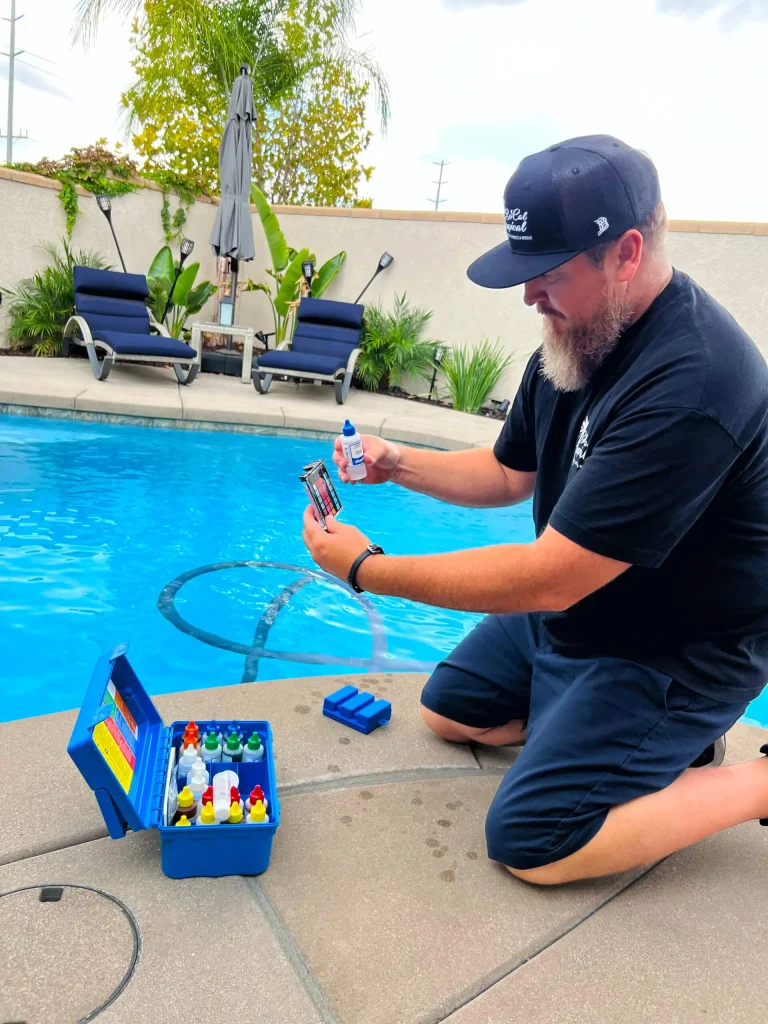
According to the CDC, the ideal free chlorine level for residential and public pools is between 1 and 3 parts per million (ppm), with pH balanced between 7.2 and 7.8. At these levels, chlorine works effectively without causing irritation.
Testing isn’t a “set it and forget it” task, either. Factors like sunlight, swimmer load, rainfall, and temperature (all of which fluctuate constantly in Houston) can throw off chlorine levels within just a day or two. This is why regular testing and adjustment are essential, not optional.
How Professional Pool Cleaning Reduces Health Risks
This is where professional maintenance makes a real difference. A pool service does more than skim leaves and vacuum debris, it ensures your water chemistry stays in that safe, effective range consistently.
Consistent Water Testing
Professionals test chlorine, pH, alkalinity, and stabilizer levels on a regular schedule, catching small imbalances before they become bigger (and smellier) problems.
Preventing Chloramine Buildup
Through proper shock treatments and circulation management, professional cleaners prevent the chloramine buildup that causes most of the skin and eye irritation people blame on chlorine.
Adjusting for Houston’s Climate
Houston’s heat, humidity, and heavy pool usage during summer months create unique chemical challenges. Local pool professionals understand how to adjust chlorine and stabilizer levels to account for intense sun exposure and frequent rainfall, something a generic guide or at-home test strip can’t always account for.
Reducing Health Risks for Families
At the end of the day, a professionally maintained pool isn’t just clearer and better-smelling, it’s safer. Proper chlorine management significantly reduces the risk of both recreational water illnesses and chemical irritation.
Also read: What Should You Not Do in a Pool?
The Bottom Line
So, is chlorine harmful for your body? In the amounts used for proper pool sanitation, no. In fact, it’s one of the most effective and well-studied tools available for keeping swimmers safe from harmful pathogens. The irritation most people associate with chlorine is usually caused by chloramines, a sign of poor water balance rather than chlorine itself.
The real key to a safe, comfortable swimming experience is consistent, professional water management. That means regular testing, correct chemical balancing, and adjustments tailored to our unique Houston climate.
If you want peace of mind that your pool is both safe and enjoyable all season long, consider partnering with a professional pool cleaning service. It’s the easiest way to protect your family’s health while keeping your backyard oasis crystal clear.
Keep your pool safe, balanced, and crystal clear with our professional Weekly Pool Service.