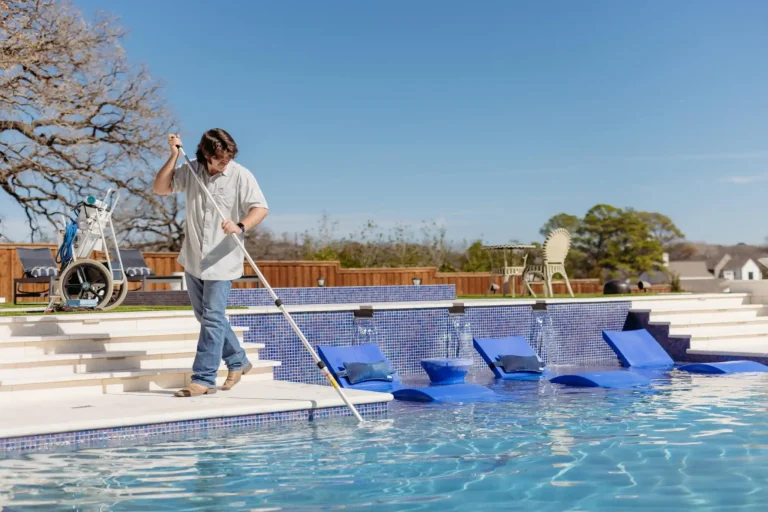
Swim in a Pool With Calcium Buildup is a common concern If you’ve noticed a chalky white crust creeping along your pool’s tile line or a rough, scaly texture on the pool’s surface, you’re likely dealing with calcium buildup. It’s one of the most common pool maintenance issues here in the Greater Houston area, thanks to our naturally hard water. But the big question on every pool owner’s mind is simple: is it actually safe to swim in a pool that has calcium buildup?
The short answer is yes, in most cases, swimming in a pool with calcium buildup is safe. It’s not toxic and won’t make you sick. However, that doesn’t mean you should ignore it. Calcium buildup can scratch your skin, damage pool equipment, and signal deeper water chemistry problems that could affect both swimmers and your pool’s lifespan. Let’s break down everything you need to know.
What Is Calcium Buildup in a Pool?
Calcium buildup happens when calcium carbonate or calcium silicate in the water solidifies and deposits onto pool surfaces. This typically shows up as:
- White, flaky scale along the waterline or tile
- Rough, crusty patches on plaster or pebble-finished pools
- Cloudy or hazy pool water
- Grayish-white stains on pool equipment like heaters and filters
This buildup is directly tied to something called calcium hardness, which measures the amount of dissolved calcium in your pool water. In the Houston area, our municipal water supply tends to be on the harder side, meaning it naturally carries more dissolved minerals, including calcium. That makes local pools especially prone to this issue, particularly during Houston’s hot summer months when water evaporates quickly and leaves mineral concentrations behind.
Also read: What Does Vinegar Do to a Swimming Pool?
Is It Safe to Swim in a Pool With Calcium Buildup?
Generally speaking, yes. Calcium itself is not a hazardous substance, and swimming in water with elevated calcium hardness won’t cause illness or poisoning. Many swimmers won’t notice any immediate effects at all.
That said, there are a few ways calcium buildup can affect your swimming experience and safety:
Rough or Scratchy Surfaces
Calcium scale often forms on the pool’s interior surfaces, steps, and around the waterline tile. This buildup can feel gritty or sharp to the touch. Kids running their hands along the wall, swimmers pushing off during laps, or anyone brushing against rough scale can end up with minor skin scrapes or irritation.
Cloudy Water and Reduced Visibility
Severe calcium buildup can cause water to look hazy or cloudy. Beyond being unattractive, reduced visibility is a genuine safety concern, especially in pools where children or inexperienced swimmers are present. Being able to see the pool floor clearly is important for spotting hazards or a swimmer in distress.
Skin and Eye Sensitivity
While calcium itself isn’t typically irritating, high calcium hardness is often accompanied by imbalanced pH and alkalinity levels. This combination can lead to dry skin, itchy eyes, or general discomfort after swimming, similar to what you might feel in water with poor chemical balance overall.
When Calcium Buildup Becomes a Bigger Problem
While an occasional swim in a pool with mild scale isn’t dangerous, chronic calcium buildup can create issues that go beyond swimmer comfort.
Damage to Pool Equipment
Calcium scale doesn’t just settle on visible surfaces. It also builds up inside pipes, filters, heaters, and pumps. Over time, this can reduce water flow, strain your pump motor, and cause heaters to work less efficiently or overheat. Left unchecked, this can lead to costly equipment repairs or replacements.
Structural Damage to Pool Surfaces
Plaster and pebble-finished pools are especially vulnerable. Calcium buildup can etch into these surfaces, making them permanently rough and eventually leading to cracking or deterioration. Once calcium scale bonds tightly with plaster, removing it without damaging the surface becomes much more difficult.
An Imbalanced Pool Overall
High calcium hardness rarely travels alone. It’s often a sign of broader water chemistry imbalance, including elevated pH or total alkalinity. These imbalances can reduce the effectiveness of chlorine, allowing bacteria and algae to thrive even in a pool that looks clear on the surface.
Why Houston Pools Are Especially Prone to Calcium Buildup
If you’re a pool owner in Houston, Sugar Land, Katy, The Woodlands, or anywhere else in the Greater Houston area, you’re dealing with water that’s naturally harder than in many other parts of the country. Add to that our long, hot swimming season, and you’ve got a recipe for faster evaporation and mineral concentration.
Every time water evaporates from your pool, the calcium and other minerals stay behind. Homeowners who frequently top off their pool with tap water are essentially adding more calcium hardness over time, since Houston’s municipal water already carries a moderate-to-high mineral content. Without regular testing and balancing, calcium hardness levels can climb well above the ideal range of 200 to 400 parts per million (ppm).
Also read: Humidity Solutions for Pools: How Houston Homeowners Can Control Moisture Year-Round
How to Tell if Your Pool’s Calcium Levels Are Too High
You don’t have to guess. A simple water test can reveal your pool’s exact calcium hardness level. Signs that your levels may be too high include:
- Visible white scale on tile, steps, or pool walls
- Water that looks slightly cloudy even after shocking
- A rough texture on plaster surfaces
- Reduced water flow from jets or filters
- Scale buildup inside the skimmer or on equipment
If you notice several of these signs together, it’s a strong indication that your calcium hardness is out of balance and needs professional attention.
What to Do About Calcium Buildup
The good news is that calcium buildup is manageable with the right approach.
Test and Balance Water Regularly
Routine water testing helps catch rising calcium hardness before it turns into visible scale. Ideally, pool water should be tested weekly, especially during Houston’s peak swim season.
Use a Pool-Safe Scale Remover or Descaler
For mild buildup, specialized pool descaling products can help dissolve calcium scale without damaging pool surfaces. These work best on lighter buildup and require proper dilution and application.
Physically Remove Heavy Scale
For thicker calcium deposits, brushing with a pumice stone (safe for plaster) or a specialized scale-removing pad may be necessary. This should be done carefully to avoid scratching the pool’s finish.
Consider Professional Descaling Services
Severe calcium buildup, especially scale that has bonded tightly to plaster or clogged equipment, often requires professional-grade treatment. A trusted pool service provider can safely remove buildup without damaging surfaces and identify the root cause of the imbalance.
Manage Water Evaporation and Refilling Habits
Since evaporation concentrates calcium, using a pool cover during Houston’s hottest months can help slow water loss and reduce how often you need to top off with hard tap water.
Also read: Will Flocculant Remove Calcium?
When to Call in the Professionals
If your pool has visible scale, cloudy water that won’t clear up, or equipment that seems to be losing efficiency, it’s time to bring in professional help. A qualified pool cleaning service can test your water accurately, safely remove calcium deposits, and set up a maintenance plan to prevent future buildup, saving you from costly repairs down the road.
Final Thoughts
So, can you swim in a pool with calcium buildup? Yes, in most cases it’s safe, but that doesn’t mean it should be ignored. Calcium buildup is often the first visible sign of a larger water chemistry imbalance that can damage your pool’s surfaces and equipment over time.
For Houston-area pool owners, hard water and a long swim season make calcium management especially important. If you’re seeing scale, cloudy water, or rough surfaces in your pool, don’t wait for the problem to get worse. Reach out to a local pool cleaning professional who understands Houston’s unique water conditions and can help keep your pool clear, balanced, and safe to enjoy all year long.
Ready to take the guesswork out of pool maintenance? Contact us today to schedule a consultation and let us help you determine the best system and care plan for your pool.