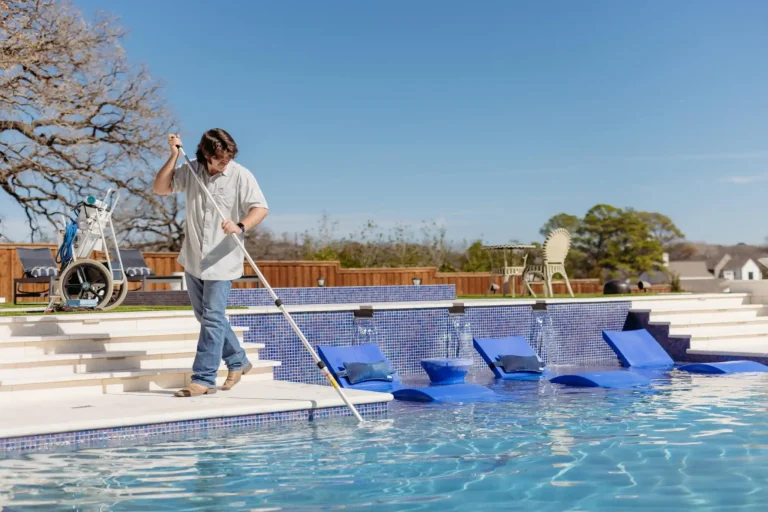
If you’ve noticed cloudy water, chalky white deposits along your waterline, or rough, scaly patches on your pool’s surfaces, you’re likely dealing with calcium buildup. This is one of the most common issues we see in pools across the Greater Houston area, thanks to our region’s naturally hard water. The good news? Calcium buildup is preventable and treatable once you understand what causes it and what actually removes it.
In this guide, we’ll break down exactly what removes calcium from a pool, why it happens in the first place, and why choosing the right treatment to Removes Calcium matters for keeping your water clear and your surfaces protected for the long haul.
What Is Calcium Buildup in a Pool?
Calcium buildup happens when dissolved calcium in your pool water becomes too concentrated and starts to solidify. There are two main types of calcium buildup pool owners deal with:
- Calcium scale – hard, crusty deposits that form on tile, pool walls, and equipment
- Calcium carbonate – white, flaky buildup that often shows up at the waterline
Both types are caused by an imbalance in your pool’s water chemistry, specifically an excess of calcium hardness. When calcium levels rise above the recommended range (typically 200–400 ppm for most pools), the excess calcium has nowhere to go and starts clinging to surfaces.
Why Houston Pools Are Especially Prone to Calcium Buildup
Houston’s municipal water supply is considered moderately hard to hard, meaning it naturally contains higher levels of dissolved minerals, including calcium. When you fill or top off your pool with tap water, you’re introducing these minerals directly into your pool system. Combine that with our region’s hot climate, which speeds up evaporation and concentrates minerals even further, and you’ve got a recipe for scale buildup that many other regions simply don’t deal with as often.
Also read: Can You Swim in a Pool With Calcium Buildup?
What Removes Calcium From a Pool?
There isn’t a single fix for calcium buildup. Depending on how severe the problem is, what removes calcium typically involves a combination of chemical treatments, physical cleaning, and filtration adjustments
1. Acid Washing
For pools with heavy calcium scale, particularly on plaster or tile surfaces, acid washing is often the most effective solution. This process involves draining the pool and applying a diluted acid solution directly to the affected surfaces to dissolve the mineral deposits. It’s a powerful method, but it should always be handled by professionals since improper acid washing can damage plaster or discolor surfaces.
2. Calcium Scale Removers
There are specialized pool chemicals designed specifically to target and dissolve calcium scale without requiring a full drain. These scale removers work well for moderate buildup and are often used as a maintenance step between more intensive cleanings. They’re typically applied directly to affected areas or added to the water depending on the product.
3. Pumice Stones and Scale Pads
For calcium deposits at the waterline or on tile, a pumice stone (safe for pool surfaces) or a specialized scale pad can physically scrub away buildup. This method works best for smaller, localized areas rather than widespread scaling throughout the pool.
4. Muriatic Acid Spot Treatment
Diluted muriatic acid can be used in a controlled way to spot-treat calcium deposits on tile and hard surfaces. Because muriatic acid is a strong chemical, it requires careful handling, proper dilution ratios, and protective equipment. This is another task best left to trained pool technicians who understand how to apply it safely without damaging surrounding materials.
5. Sequestering Agents
Rather than removing calcium after it’s built up, sequestering agents work proactively by binding to calcium ions in the water and preventing them from crystallizing on surfaces. These products are especially useful for pools that continually battle high calcium levels due to hard water fill sources, which is common throughout Houston.
6. Draining and Refilling With Balanced Water
In severe cases where calcium hardness levels are extremely high, the most straightforward solution is to partially or fully drain the pool and refill it with water that has better mineral balance. This is often paired with a filtration or treatment system to prevent the same hard water issues from recurring immediately.
How to Prevent Calcium Buildup Going Forward
Removing calcium is only half the battle. Keeping it from coming back requires consistent maintenance and water testing.
Test Your Water Regularly
Calcium hardness should be tested alongside your regular chlorine, pH, and alkalinity checks. Catching rising calcium levels early makes them far easier to manage before they turn into visible scale.
Maintain Proper pH and Alkalinity
When pH and alkalinity are out of balance, calcium is more likely to come out of solution and form deposits. Keeping these levels within the recommended range reduces the chances of scale formation significantly.
Use a Pool Filter Rated for Mineral Content
A well-maintained filtration system helps capture some mineral particles before they have a chance to settle on surfaces. Regularly cleaning or backwashing your filter improves its effectiveness against calcium and other debris.
Brush Your Pool Weekly
Routine brushing, especially along the waterline and in corners where water circulation is weaker, helps prevent calcium from settling and hardening in the first place.
Consider a Water Softening System for Fill Water
If you frequently top off your pool with hard tap water, installing a softening attachment on your hose can reduce the amount of calcium being introduced every time you add water.
Also read: Will Flocculant Remove Calcium?
When to Call a Professional Pool Cleaning Service
While minor calcium buildup can sometimes be managed with DIY products, more significant scaling often requires professional-grade treatment. If you’re noticing any of the following, it’s time to call in the experts:
- Rough, sandpaper-like texture on pool surfaces
- Visible white or gray scaling that won’t scrub off
- Cloudy water that persists despite normal chemical treatment
- Calcium deposits on pool equipment, jets, or heaters
Professional pool technicians have access to industrial-strength treatments, proper acid washing techniques, and testing equipment that goes beyond typical at-home test strips. They can also identify whether your calcium issue is a symptom of a larger water balance problem.
Keep Your Houston Pool Calcium-Free Year-Round
Calcium buildup is one of the most common — and most preventable — problems pool owners in the Greater Houston area face, largely due to our naturally hard water supply. Whether you’re dealing with a light dusting at the waterline or heavy scale across your pool’s surfaces, there are effective ways to removes calcium and keep it from coming back.
If your pool is showing signs of calcium buildup, don’t wait for it to get worse. Regular professional maintenance not only keeps your water crystal clear but also protects your pool’s surfaces and equipment from long-term damage. Reach out to a trusted local pool cleaning service to removes calcium buildup, schedule a water test and get your pool back to pristine condition.
Check out our Pool Service in Houston